


IQAC
The primary aim of the IQAC is to develop a system for conscious, consistent and catalytic action to improve the academic and administrative performance of the institution.
Functions of the IQAC are:
Development and application of quality benchmarks/parameters for the various academic and administrative activities of the institution.
Dissemination of information on the various quality parameters of higher education
Organization of workshops, seminars on quality related themes and promotion of quality circles
Documentation of the various programmes / activities leading to quality improvement
Preparation of Annual Quality Assurance Report (AQAR) to be submitted to NAAC based on the quality parameters.
IQAC shall evolve mechanisms and procedures for:
- Ensuring timely, efficient and progressive performance of academic, administrative and financial tasks.
- The relevance and quality of academic and research programmes
- Equitable access to and affordability of academic programmes for various sections of society
- Optimization and integration of modern methods of teaching and learning
- The credibility of evaluation procedures
- Ensuring the adequacy, maintenance and functioning of the support structure and services
- Research sharing and Networking with other institutions in India and abroad.
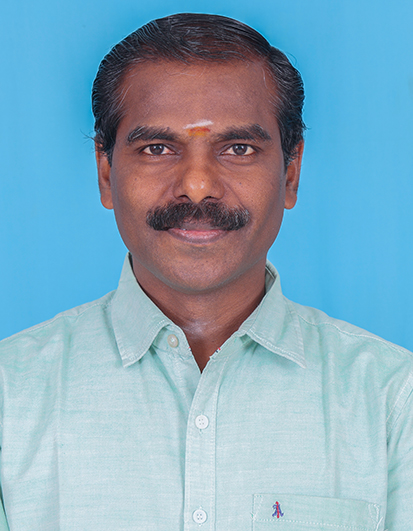
| 1 | Dr.N.PanchanathamVice-Chancellor, GRI | Chairperson |
| 2 | Dr.P.U.MahalingamSenior Professor of Biology | Director |
| 3 | Registrar, GRI | Member |
| 4 | Dr.P.BalasubramaniamSenior Professor of Mathematics | Member |
| 5 | Dr.S.MeenakshiSenior Professor of Chemistry | Member |
| 6 | Dr.K.S.PushpaSenior Professor of Home Science | Member |
| 7 | Dr.L.RathakrishnanSenior Professor of Rural Industries and Management | Member |
| 8 | Dr.B. TamilmaniSenior Professor of Cooperation | Member |
| 9 | Dr.M.SundaramariSenior Professor of Agriculture | Member |
| 10 | Dr.P.ShanmugavadivuSenior Professor of Computer Science | Member |
| 11 | Dr.S.NehruSenior Professor of Economics | Member |
| 12 | Dr.P. KalavathiProfessor i/c of Computer Centre | Member |
| 13 | Dr.S. BalasundariProfessor and Dean of English and Foreign Languages | Member |
| 14 | Ms.M. BoomaFirst Year, MBA | Member |
| 15 | Mr.S. PraveenFirst Year M.Sc Microbiology | Member |
| 16 | Ms.V. PrawnyaResearch Scholar UGC - JRF Department of Education | Member |
| 17 | Ms. Prethika S.RResearch Scholar in Applied Geology | Member |
| 18 | The Controller of Examinations | Member |
| 19 | Finance Officer | Member |
| 20 | Director, Research and Development | Member |
| 21 | Director, Academic | Member |
| 22 | The Managing TrusteeGandhigram Trust, Gandhigram | Member |
| 23 | Dr.V.Vinod KumarProfessor and Head, Department of English, Bharathidasan University, Tiruchirappalli - 620 024, Tamil Nadu | Member |
| 24 | Shri.P.SwaminathanSecretary, SRV Public School, Rasipuram, Namakkal Dt. | Member |
| 25 | Mr.K.KarthikeyanFastura Technologies, 311, 1st East Main Road, Anna Nagar, Sathamangalam, Madurai | Member |
| 26 | Dr.R.Kamalahar IFSChief Conservator of Forests and Custodian (EFI), Vanashree Forest Complex, Chinnakada, Kollam, Kerala | Member |
Annual Quality Assurance Report
Committee Meeting Minutes
- Academic and Administrative Audit
- Gender Audit
- Digital Audit
- Green, Environment and Energy Audits
- Policies
- Institutional Organogram
1. Curriculum Feedback Questionnaires
| Feedback Submission | Online | Offline |
|---|---|---|
| Student | Click here | Click here |
| Teacher | Click here | Click here |
| Alumni | Click here | Click here |
| Parent | Click here | Click here |
| Academic Peer | Click here | Click here |
| Employer | Click here | Click here |
2. Feedback Analysis Report
3. Action Taken Report
GBFSTC
The Global Business Foundation Skills Training Cell (GBFSTC) of the Gandhigram Rural Institute (Deemed to be University) has been formed to train the final year undergraduate students of the Institute to be better prepared for careers in general and the ITES (Information Technology Enabled Services) sector in particular.
The Global Business Foundation Skills (GBFS) program helps the final year undergraduate students to become ‘industry ready’ before they walk out of the portals of the university. It trains the students in basic foundation skills, which will help them be better prepared for employment, especially in the Business Process Management (BPM) industry. The program has been developed by experts from NASSCOM member companies, such as Accenture, Convergys, Deloitte, Dell, Genpact, Infosys BPO, and IBM.
Key benefits of GBFS program, envisioned by NASSCOM
- Student: Industry awareness, up-skilling to prepare for entry-level job opportunities in the Indian BPM industry
- Teacher/Trainer: Higher training skills, job satisfaction, permanent asset to their institution
- University/College: Graduating students who are employable, increased goodwill, higher interest from industry
- Industry: Trained/certified resources at entry level jobs, lesser on-the-job training duration leading to savings in the training, lesser attrition
- Country: Employable workforce with higher earning capability, attracting serious investors
The GBFSTC team of GRI has been constituted by the Vice Chancellor to further this agenda. The members of the team underwent an intensive nine-day training program organised by Infosys BPO at Mangalore, Karnataka in the month of August 2017
Members of the GBFS Training Cell
| 1 | Dr.P.ShanmugavadivuProfessor, Department of Computer Science and Applications and Coordinator, GBFS |
| 2 | Dr.P.NithiananthiAsst. Professor, Department of Physics, GRI |
| 3 | Mr.T.David Jeyaraj FranklinAsst. Professor, School of English and F.L., GRI |
| 4 | Sri.R.T.BalamuraliAsst. Professor, Centre for Rural Technology, GRI |
| 5 | Dr.P.MuthukumarAsst. Professor, Department of Mathematics, GRI |
| 6 | Dr.B.Senthil KumarAsst. Professor, Department of Rural Industries and Management, GRI |
| 7 | Dr.P.S.SreedeviAsst. Professor, Department of Education, GRI |
Members of the Advisory Committee
| 1 | Vice-Chancellor, GRI | Chairman |
| 2 | Registrar, GRI | Member |
| 3 | Director (Research & Development), GRI | Member |
| 4 | Director (Internal Quality Assurance Cell), GRI | Member |
| 5 | Director (Academic), GRI | Member |
| 6 | Director, Placement Cell, GRI | Member |
| 7 | Dr.P.Shanmugavadivu, Coordinator, GBFS, GRI | Member & Convenor |
GBFS Upcoming Events
GBFS Training for Faculty Members (January 2018)
GBFS Announcements
There are no announcements at present.
GIAN
Govt. of India approved a new program titled Global Initiative of Academic Networks (GIAN) in Higher Education aimed at tapping the talent pool of scientists and entrepreneurs, internationally to encourage their engagement with the institutes of Higher Education in India so as to augment the country’s existing academic resources, accelerate the pace of quality reform, and elevate India’s scientific and technological capacity to global excellence.
In order to garner the best international experience into our systems of education, enable intersection of students and faculty with the best academic and industry experts from all over the world and also share their experiences and expertise to motivate people to work on Indian problems, there is a need for a Scheme of International Summer and Winter Term. During the ‘Retreat’ of IITs with Minister of Human Resource Development Smt. Smriti Zubin Irani on June 29, 2014 at Goa, it was decided that “A system of Guest Lectures by internationally and nationally renowned experts would be evolved along with a comprehensive Faculty Developed Programme not only for new IITs, IIMs, IISERs but also other institutions in the country.
GIAN is envisaged to catalyse higher education institutions in the country and that it will initially include all IITs, IIMs, Central Universities, IISc. Bangalore, IISERs, NITs and IIITs subsequently cover good State Universities where the spinoff is vast. GIAN is an evolving scheme which will initially include participating of foreign faculty in Institutes as Distinguished / Adjunct / Visiting faculty / Professors of Practice, etc. to participate in delivering Short or Semester-long Courses. Other activities will be included in due course.
National Coordinating Institute
IIT, Kharagpur
www.gian.iitkgp.ac.in- To increase the footfalls of reputed international faculty in the Indian academic institutes
- To provide opportunity to our faculty to learn and share knowledge and teaching skills in cutting edge areas
- To provide opportunity to our students to seek knowledge and experience from reputed international Faculty
- To create Avenue for possible collaborative research with the international faculty
- To increase participation and presence of international Students in the academic institutes
- To provide opportunity for the students of different institute/universities to interact and learn subjects in ninche areas through collaborative learning process
- To provide opportunity for the technical persons from Indian industry to improve understandings and update their knowledge in relevant areas
- To motivate the best international experts in the world to work on problems related to India
- To develop high quality course material in ninche areas both through video and print that can be used by larger body of students and teachers
- To document and develop new pedagogic methods in emerging topics of national and international interest
| S.No. | Code | Area |
| 1 | ADP A | Design, Planning and Heritage |
| 2 | CBM B | Chemical, Bio-Chemical &material Science |
| 3 | EES C | Earth & Environment Science |
| 4 | EIC D | Electronics, Electrical, Information & Communication Technology |
| 5 | HLA F | Humanities & Liberal Arts |
| 6 | LAW W | Law |
| 7 | LIC G | Other Categories/ Interdisciplinary Categories |
| 8 | LSH H | Life Science & Healthcare |
| 9 | MCS K | Mathematical & Computer Science |
| 10 | MMT J | Management |
| 11 | MSI L | Mechanical Science & Infrastructure |
| 12 | PSC M | Physical Science |
| 13 | SSC N | Social Sciences |
Honorarium to International Faculty
- US$ 8000 for 12 to 14 hours (1 Credit)
- US$ 12000 for 12 to 14 hours (1 Credit)
The Fund Covers:
- Travel
- Honorarium
- Video recording of their Lectures
Local Hospitality will be arranged by the Host Institution (GRI-DU)
The Duration can be mutually decided by the Host Institution and the visiting faculty
Who Can Apply?
Faculty Members from
- IITs
- NITs
- IISc
- IISERs
- IIEST
- National Law Schools
- IIMs
- Central Universities & State Universities (Selected by AICTE and UGC)
How to Apply?
Proposal Template
- Course Title
- Overview
- Objectives
- Course details
- Module A:
- Module B:
- Industry/ Research Organizations:
- Academic Institutions:
How to Submit?
Faculty Members from
- Prepare a Proposal for a Course in the Prescribed Format
- The Local Coordinator will submit the proposal to GIAN Portal
Each approved GIAN activity / course will be displayed in the GIAN portal. It will be the responsibility of the Host Institution to arrange for the conduct of the courses. This includes
- Call for Participation
- Registration
- Selection of Participants
- Collection and Disbursement of Funds
- Contact and Arrangements for National and International Experts
- Arrangements for Classes, Accommodation, Provision of Certificates, Conduct of Examinations (if any)
- Credit Transfer Issues
- Creation of Content and Archival / maintenance of repository
- Linking with GIAN Portal
- Submission to National Digital Library, etc
Each host Institution will maintain their local GIAN portal which will be connected to the main GIAN portal
It is expected that each such course will be transmitted on-line and/or video recorded for others to view later through the local and national GIAN portal and the National Digital Library
All permissions for the same will be taken by the Host Institution. Typically many such courses may offer not only participation certificates but also allow participants to acquire credits
The Host Institution will allow for transfer of credits if required by institutions of participating institutions. Guidelines for credit sharing will be developed in due course by GIAN Implementation Committee for consideration by various Institutes
The courses offered by a host institution should be made available for participation from other Institutions
In general it is not expected that more than 50% participants will be from the Host Institution
For courses offering credits, it should follow all standard norms of the Host Institution including continuous evaluation through assignments, quizzes, etc. and examinations like class tests, terminal examinations
Proposals can have scope for inclusion of Teaching Assistants.
Results should be declared within one month of the completion of the course
Priority should be given to students taking the course for credit than those who only participate without credits
Other details will be defined in due course by a suitable Sub-Committee designated by the GIAN Implementation Committee
- Proposals will be submitted on-line by the Local Institute Coordinator of an approved host Institute through the National GIAN portal in the prescribed proforma
- Each proposal will be submitted to a Sectional Committee
- The proposing Institution will ensure that the International Faculty can communicate in English or a suitable language that is clearly the appropriate medium of instruction for the said course
- The courses will primarily be for credit and cover
- 10 to 14 hours for a typical 1 credit course over a period of at least one week covering 5 working days and
- 20 to 28 hours for a 2 credit course over a period of at least 2 weeks covering 10 working days
- The course will have regular evaluation mechanisms. For alternative credit structures, such normalized credit equivalence will be explained in the proposal
- The proposer is expected to be aware that if the proposal is selected then the International Faculty is expected to accept to participate
- The Chairperson of the Sectional Committee will designate all or some members of the Sectional Committee to review the proposal and give their views
- He may, if felt needed, also arrange for selection of reviewers and obtaining the reviews. The recommendation will be finalized by the Chairperson of the Sectional Committee
- Selected proposals will be forwarded to the GIAN Implementation Committee. The process will be made on-line
- The GIAN Implementation Committee will develop methods for final approval of the proposals
- In some cases, proposals may directly go to the GIAN Implementation reputed sources like National and Foreign Academies, Embassies, Government, etc. or may be initiated by the GIAN Implementation Committee itself
- Such proposals will be submitted to the portal either by a member of the GIAN Implementation Committee or through the National or Regional Coordinator
- Each approved programme will be publicized on-line in the GIAN portal
Patron:
| Shri. Prakash Javadekar |
| Minister of Human Resource Development, GOI |
Implementation Committee
| Shri V.S.Oberoi,Secratary(HE), MHRD |
| Shri R.Subrahmanyam,AS(TE), MHRD |
| Shri Praveen Kumar, JS(Admin),MHRDBOM |
| JS & FA, MHRDBOM |
| Prof.Ved Prakash, Chairman,UGCBOM |
| Prof.A.D.Sahasrabudhe, Chairman,AICTEBOM |
| Pro.P.P.Chakrabarti, Director,IIT KharagpurBOM |
| Prof.B.Ramamurthi, Director,IIT MadrasBOM |
| Prof.Swapan Bhattacharya, Director,NIT SurathkalBOM |
| Prof.Anurag Kumar, Director,IISc BangaloreBOM |
| Prof.Sushil Vachani, Director,IIM BangaloreBOM |
| Prof.S.K.Sopory, Vice Chancellor,JNU DelhiBOM |
| Dr.A.Mukhopadhyay, DSTBOM |
Implementation CommitteeBOM
| Prof.A.N.Samant.IIT, Kahragpur (IIT,NIT,IIIT,IIEST.SPA)BOM |
| Prof.Prasenjit Sen, JNU New Delhi,Central UniversitiesBOM |
| Prof.Sourav Mukherji, IIM Bangalore,Management SchoolsBOM |
| Prof.A.G.Samuelson, IISc Bangalore,(IISc,IISER)BOM |
| Dr.(Mrs).Pankaj Mittal, Additional Secretary(UGC approved Universities & Law Schoold)BOM |
| Dr.B.L.Rama, Director,AICTE (AICTE approved Engg.Colleges)BOM |
| Name | Dr.G. Mahadevan |
| Designation | Professor |
| Address | Department of Mathematics Gandhigram Rural Institute Deemed University Gandhigram 624 302, Dindigul, Tamil Nadu |
| g.mahadevan@ruraluniv.ac.in, grucc@ruraluniv.ac.in | |
| Phone | 0451-2452371 (O) 0451-2436780(R) |
| Fax No. | 0451-2454466 |
| Mobile No. | 8778099305 |
- You need to contact Local Coordinator of your Institute for proposal submission under GIAN
- Once Local Coordinator invites course coordinator to submit a proposal, the course coordinator will receive a mail including a link to upload the Proposal. The proposals to upload should be in PDF format
- The format of Foreign Faculty Consent Form should be downloaded and sent to foreign faculty for his/her signed consent. The scanned copy of the same should be uploaded in PDF format while submitting the proposal
- Course coordinator should upload the proposal and click on Final Submit
- If required, the proposal may be sent back to the course coordinator for modification and resubmission
- The status of the proposal can be viewed from Proposal Tracking link on the Home page of GIAN
- If the course is approved by APEX body, contact the Local Coordinator for further actions
- Course coordinator should select the participants who are attending the course, so that participants can fill the feedback form online before the completion of the course
- The following documents for each course should be completed/needed :
- Course participation certificate
- Course grade sheet
- Course completion report
- TA bill for foreign expert
- Fund Utilization certificate for the course
NSS
National Service Scheme (NSS) was launched on 24th September, 1969, by the then Union Education Minister, Dr. V. K. R. V. Rao in 37 Universities in India with 40,000 students on the Mahatma Gandhiji’s Birth Centenary year. Now spread over to 298 Universities having more than 3.2 million student volunteers. The aim of National Service Scheme is “Development of the Personality of students through Community Service”. The overall aim of NSS is to give an extension dimension to the higher education system and orient the student youth to community service while they are studying in educational institution. The NSS was started to establish a meaningful linkage between the campus and the community. NSS is a youth programme under the Ministry of Youth Affairs and Sports, Government of India. The scheme is funded by Government of India and Government of Tamil Nadu in the ratio 7:5.
NSS Symbol
The symbol of the NSS is based on the “RATH” wheel of the Sun Temple situated in Konark, Odissa. It represents the cycles of creation, preservation and release, and signify the movement in life across time and space.NSS Moto
The motto of NSS is “NOT ME, BUT YOU”. It underlines that the welfare of an individual is ultimately dependent on the welfare of the society on the whole. Therefore, it should be the aim of the NSS to demonstrate this motto in its day-to-day programme.About GRI NSS cell
The NSS Cell in Gandhigram Rural Institute – Deemed University (GRI) has organized several programmes to tune the personality of the student volunteers and make them responsible for rural development since 1979-80. The unique feature of NSS in GRI is that all the students studying Diploma, Under Graduate, and Post Graduate (except one year programmes) are NSS volunteers. There are 19 NSS units in the GRI NSS Cell, coordinated by one Programme Coordinator and supported by 19 Programme Officers. Shramadhan, tree plantation in campus and in the adopted villages, and blood donation to the people admitted in the Kasturba Hospital, Gandhigram, and Government Hospital, Dindigul, are regular features. Other important Regular Programmes organized were AIDS Awareness, Awareness Rally on Consumer Rights, Awareness Rally on Save Oil & Gas for Better Living in association with Petroleum Conservation Research Association, Awareness on Health and Hygiene, Encouragement to NSS volunteers to participate in state level programmes and other programmes for a wholesome personality development of the volunteers. Apart from the above, the Tamil Nadu State AIDS Control Society sponsored three units of Red Ribbon Clubs (RRC) which are also functioning in GRI for the promotion of health awareness among the volunteers. Though B.Ed. programme is not covered under NSS, a separate RRC unit is created for this programme. For the successful organization of the NSS Regular and Special Camping programmes necessary support is enlisted from village Youth Clubs, SHGs, Gram Panchayats, District Administration, Rotary Clubs, leading NGOs, Tamil Nadu State NSS Cell, NSS Regional Office, Ministry of Youth Affairs and Sports-Government of India, Tamil Nadu State AIDS Control Society, Food, Civil Supplies and Consumer Protection Department-Government of Tamil Nadu, and Petroleum Conservation and Research Association (PCRA).- To understand the community in which they live.
- To develop social and civic responsibilities.
- To gain skills in mobilizing community participation.
- To utilize their knowledge in finding practical solution to individual and community problems.
- To acquire leadership qualities.
- To develop capacity to meet emergencies and natural disasters.
- To practice National integration and social harmony.
Dr. T.David Jayaraj Franklin
Associate Professor
School of English & Foreign Languages
Programme Officers
| Sl.No. | Unit Number | Name and Address |
| 1. | NSS Unit - 1 | Dr. M. SURESHKUMAR Assistant Professor, Department of Mathematics Ph: 9790548330 sureshkumarmasu2009@gmail.com |
| 2. | NSS Unit - 2 | Er. B. SANGEETHAVANI Assistant Professor, Centre for Rural Technology Ph: 9566780190 racprabha@yahoo.com |
| 3. | NSS Unit - 3 | Dr. R. RAMASUBBU Associate Professor, Department of Biology Ph:9488591719 racprabha@yahoo.com |
| 4. | NSS Unit - 4 | Dr. M. ARUNACHALAM Assistant Professor, Department of Chemistry Ph: 7373636253 chemarun81@gmail.com |
| 5. | NSS Unit - 5 | Dr. S. ARIVAZHAGAN Assistant Professor, Centre for Applied Geology Ph: 9994520251 arivusv@gmail.com |
| 6. | NSS Unit - 6 | Er. R.T. BALAMURALI Assistant Professor, Centre for Rural Technology Ph: 9842863747 balacengg@gmail.com |
| 7. | NSS Unit - 7 | Dr. C. RAJAMOHAN Assistant Professor, Department of Physics Ph: 9965867947 crajamohan@ruraluniv.ac.in |
| 8. | NSS Unit - 8 | Dr. P. PONNUSAMY Assistant Professor, Department of Education Ph: 9600311814 pponnusamy56@gmail.com |
| 9. | NSS Unit - 9 | Dr. T. ANANTHA VIJAYAH Associate Professor, School of English & Foreign Languages Ph: 9488251400 |
| 10. | NSS Unit - 10 | Dr. K. KESAVA RAJARAJAN Assistant Professor, Department of Tamil Ph: 9842547822 rkkrajarajan@yagoo.com |
| 11. | NSS Unit - 11 | Dr. M. SEENIVASA PERUMAL Assistant Professor, Department of Chemistry Ph: 9715145939 mspchem99@gmail.com |
| 12. | NSS Unit - 12 | Dr. T. DAVID JEYARAJ FRANKLIN Assistant Professor, School of English & Foreign Languages Ph: 9245163452 davidjraj@yahoo.co.in |
| 13. | NSS Unit - 13 | Dr. B. SENTHILKUMAR Assistant Professor, Department of Rural Industries and Management Ph: 9003032041 senthil.b1980@gmail.com |
| 14. | NSS Unit - 14 | Dr. M. MUTHUKUMAR Associate Professor, Centre for Geoinformatics Ph: 9865505886 m.muthu.m@gmail.com |
| 15. | NSS Unit - 15 | Dr. R. SAHUL HAMEED Assistant Professor, Department of Home Science Ph: 8300157893 rsahul_fsn@rediffmail.com |
| 16. | NSS Unit - 16 | Dr. N. R. DEEPA Assistant Professor, Department of Economics Ph: 9865944086 nrdeepa78@gmail.com |
| 17. | NSS Unit - 17 | Dr. KHANDARE CHANDU LAXMAN Assistant Professor, Department Hindi Ph: 8903551566 kchanduheu@gmail.com |
| 18. | NSS Unit - 18 | Dr. N. DEVAKI Associate Professor, Department Education Ph: 8248955020 devakiaries@gmail.com |
| 19. | NSS Unit - 19 | Dr. R. BAGDHA VATCHALA PERUMAL Assistant Professor, Department Education Ph: 9688775271 bvp2007diet@gmail.com |
Any student enrolled as NSS volunteer should undertake various programmes in the adopted villages and University campus atleast 120 hours in a year for a continuous of two years. The volunteer should participate fully in the NSS programmes and should be conversant with the objectives of NSS. The NSS units organize the regular activities as detailed below:
- General orientation of NSS Volunteers – 20 hrs.
- Career guidance for the NSS volunteers – 30 hrs.
- Community work including Campus work and observation and celebration of National important days – 70 hrs.
HEPSN
The Gandhigram Rural Institute – Deemed University is one of the ten institutions chosen at the national level by UGC under the ninth plan to implement the Scheme for Higher Education for Persons (Disabled) With SpecialNeeds (HEPSN) in order to provide special assistance to disabled students to facilitate better accessibility in higher education system. This scheme is in operation at Gandhigram Rural Institute – Deemed University since April 2001. Under this HEPSN, Our University has organized more than 100 different flagship activities such as student/support group counseling, Soft skills training, technical skills training, entrepreneurship training, communication skills training, Emotional Intelligence enhancement workshop, etc.
The HEPSN cell is also facilitating the disabled students of our University to get various scholarships particularly from NHFDC –Trust Fund Scheme. Through HEPSN, many of our disabled students have got employment in various private sectors. Towards the isabled friendly campus mission, our institute superstructure has been modified architecturally barrier-free mode such as ramps and slopes, handrails to all buildings, special toilets, lowered washbasins, etc. to ensure disabled friendly campus.
On an average about 25 to 30 students both boys and girls, pursue their higher education at the Gandhigram Rural Institute-Deemed University from Diploma to Doctoral programme. Currently during the academic year 2015-2016,there are about 21 special needs students (12 boys and 9 girls) enrolled with the HEPSN, GRI.
- To provide equal educational opportunities to differently abled persons in higher education institutions.
- To create awareness among the functionaries of higher education about the specific educational needs of differently abled persons.
- To equip higher education institutions with the facilities to provide access to differently abled persons.
- To provide special devices to higher education institutions that will augment the learning experiences of differently abled persons.
- To monitor the implementation of all existing and future legislation and policies, which are pertaining to the higher education of differently abled persons.
Reservation Cell
The Gandhigram Rural Institute (Deemed to be University) had set up a special cell on 15.06.1989 to assist the students from Scheduled Caste (SC) and Scheduled Tribe (ST) communities and Other Backward Classes (OBC) in improving their academic performance and in optimizing their development in their personal and social life at the University as per the guidelines of UGC/MHRD/State Government for strict implementation of reservation policy in University. The cell also ensure the effective implementation of reservation policy in admission, recruitment, allotment of staff quarters, hostels, and various Scholarship/Fellowship/Awards/Tuition Fee Concession etc. of Scheduled Caste / Scheduled Tribes & Other Backward Classes.
VISION
To oversee the effective implementation of policies and programmes for the below poverty groups among rural areas and to act as a source of strength by providing assistance in order to achieve equality and social justice.MISSION
- To provide guidelines and counseling with respect to academic, financial assistance, social and other matters to the students from below poverty groups with a view to improve their academic performance.
- To Provide knowledge support of various scholarship schemes available to the students from rural sector particularly to the below poverty groups.
- To extend all necessary services to the students from below poverty groups and look after the welfare of these communities.
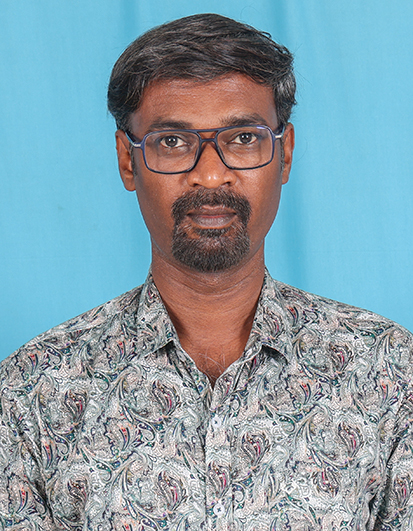
Dr.R.T.Balamurali
Centre for Rural Technology, GRI
EMail ID : rcell@ruraluniv.ac.in, liaisonofficergri@gmail.com
Contact : 9842863747, 9363069006
Address
The Liaison Officer,Reservation Cell, Administrative Block,
Gandhigram Rural Institue (DTBU),
Gandhigram, Dindigul(Dt)-624302,
TAMIL NADU.
- To provide various Scholarship and Fellowship schemes for SCs/STs and OBCs students in the Institute.
- To monitor and evaluate continuously the implementation of various scholarship/ Fellowship schemes/ policies in the Institute and design/suggest/take measures for effective implementation of the policy and programmes of the Government.
- To guide the SC/ST & OBC students of the Institute, to optimally utilize the benefits of the Scholarship schemes offered by the State and Central Government (MHRD/UGC).
- To circulate State Government /Central Government and University Grants Commission’s circulars, information regarding scholarship/Fellowship belonging to the Scheduled Castes/Scheduled Tribes and OBC in the Institute for different courses, collect the forms before the stipulated date and to take follow up action, wherever required.
- To analyze the information collected and prepare reports for onward transmission to the Ministry of Human Resource Development/University Grants Commission and such other authorities.
- To function as a Discrimination Committee for the Grievances of SC/ST students and employees of the University and render them necessary help in solving their academic as well as administrative problems.
Advisory Committee
The Reservation Cell Advisory Committee ensures the effective implementation of the policies and programmes of the Government of India, UGC/MHRD/AICTE and State Governments with regard to the welfare and promotion of the SC/ST and Other Backward Classes. It also suggests measures to achieve the objectives laid down by the various government agencies. The Committee meets at least two times in a year and the decisions arrived at are mandatory to be implemented. The Committee functions under the Chairmanship of Vice Chancellor.
| S.No. | Members | Designation |
|---|---|---|
| 1 | Dr.N.PANCHANATHAM, Vice-Chancellor, GRI (DTBU) | CHAIR PERSON |
| 2 | Dr.M.SUNDARAMARI, Registrar In-charge, GRI (DTBU) | MEMBER |
| 3 | Dr.A.BALAKRISHNAN, Senior Professor, Head & Dean, Dept. of Applied Research | MEMBER |
| 4 | Dr.S.MANIVEL, Senior Professor, Dept. Of Co-operation, Dean, Student Welfare | MEMBER |
| 5 | Dr.P.SHANMUGAVADIVU, Senior Professor, Dept. of Computer Science & Applications | MEMBER |
| 6 | Dr.R.MANI, Professor, Dept. of Gandhian Thought & Peace Science | MEMBER |
| 7 | Dr.P.U.MAHALINGAM, Professor, Dept. of Biology | MEMBER |
| 8 | Dr.S.BALASUNDARI, Professor, & Dean, School of English & Foreign Languages | MEMBER |
| 9 | Dr.R.T.BALAMURALI, Liaison Officer, Asso. Professor, Dept. of Rural Industries & Management | MEMBER/ CONVENER |
Grievance & Prevention of Caste Discrimination Committee
The SC/ST staff & students can send their complaints if any and approach the Liaison Officer of the Reservation Cell for redressal of grievances on academic, administrative or social problems. The Section Officer of the Reservation Cell will convene the meeting of the committee to meet the concerned students & staff to understand their problems and take necessary action and/or render them necessary advice or help to resolve the issues. A Committee is formed for the Grievance & Prevention of Caste Discrimination.
Members
| Sl.No. | Name of the Members | Position |
| 1 | Dr.Well Haorei, Associate Professor, Dept. of Rural Industries & Mgt. | Liaison Officer/Chairperson |
| 2 | Dr.P.Anandakumar, Senior Professor & Head, Dept. of Tamil | Member |
| 3 | Dr.M.Saleem Baig, Professor & Head i/c, Dept. of Hindi | Member |
| 4 | Dr.P.Shanmugavadivu, Senior Professor, Dept. of Computer Science and Applications | Member |
| 5 | Dr.S.Nehru, Professor, Dept. of Economics | Member |
| 6 | The Warden, Ladies Hostel | Member |
| 7 | The Warden, Boys Hostel | Member |
| 8 | Assistant Registrar, Reservation Cell | Convenor |
A “Fellowship Wing” under Reservation cell was created for helping scholars to communicate circulars regarding Fellowship, online submission of their reports (Continuation, HRA, Contingency Certificate & Yearly Progress Report etc,) to funding agency and to facilitate the sanction of fellowship.
The students can avail/apply for the following Scholarship/Fellowship schemes through the website link:
http://www.ugc.ac.in/ugc_schemesList of Schemes:
- Post-Graduate Merit Scholarship for University Rank Holder
- Post-Graduate Indira Gandhi Scholarship for Single Girl Child
- Post Graduate Scholarships for Professional Courses for SC/ST Candidates
- Rajiv Gandhi National Fellowship for SC/ST Candidate
- Raman Fellowship for Post-Doctoral Research for Indian Scholars in USA
- Post Doctoral Fellowship to Women Candidates
- Rajiv Gandhi National Fellowship for Students with Disabilities
- Research Awards for the Teachers
- Junior Research Fellowship
- Emeritus Fellowship
- Post Doctoral Fellowship to SC/ST Candidates
- TN State Government Postmatric Scholarship for BC/MBC/DNC Students
- TN State Government Postmatric Scholarship for SC/ST/SCC Students
- TN state government Higher Education Special Scholarship for SC/ST/SCC Students
- TN State Government Tuition Fee Concession for SC/ST/SCC Students
- TN State Government Pudhumaipen Thittam Scheme for Girl Students in Tamil Medium 6th to 12th in Government Schools
- Other State and Central Goverment Scholarship
Adi-dravidar Welfare Department, Government of Tamilnadu (For SC and ST students)
| S.No. | Scholarship/Fellowship Name | Website Link |
|---|---|---|
| 1. | Adi-dravidar /Tribal welfare Department, Govt. of Tamilnadu | http://www.edistrict.tn.gov.in |
- S.S.L.C / H.Sc / UG / PG / M.Phil Certificates whichever is applicable
- Attendance Certificate for last year study
- Community Certificate
- Income Certificate (Original certificate / Computer Generated)
- Transfer Certificate and Conduct Certificate
- Aadhaar card photo copy
- Bank pass book front page (Canara Bank only)
- Receipt for the payment of Semester fees
- Joining report for Central Scholarship Schemes, if any
- Copy of the Award letter for Central Scholarships
- Break in Certificate, if any
Scholarship for Ph.D. Full-time Research Scholars (SC, ST&SCC)
Invitation - GRI-Reservation Cell & R&D Cell-Laxmi Charities Scholarship Disbursement-MoA Ceremony
National Scholarship Portal - UGC Scholarship Schemes
Maintenance of Active Bank Account for Scholarship Disbursement (Renewal / Fresh)
Fresh/Renewal Scholarship Open for SC/ST/SCC and BC/MBC/DNC/DNT Students
Fresh Scholarship for Ph.D. Full-time Research Scholars (SC, ST & SCC)
Specimen - SC/ST/SCC (HESS Forms)
Specimen - Fresh Application form for BC MBC DNC DNT Students
Specimen - Renewal SC Scholarship Application form
Specimen - Renewal Application form for BC MBC DNC DNT Students 2021 2022
Specimen - Fresh SC/ST/SCC Scholarship Application form 2022-23
Specimen - SC/ST/SCC Tuition Fee Concession form
Blank form - SC/ST/SCC (HESS Forms) GRI Hostel Students only
Blank form - Fresh BC/MBC/DNC Scholarship
Blank form - Fresh SC/ST/SCC Scholarship Application 2022-23
Blank form - Renewal BC/MBC/DNC Scholarship Application
Blank form - Renewal SC Scholarship Application
Blank form - SC/ST/SCC Tuition Fee Concession
Adi Dravidar Welfare Department (Chief Minister Award) Form - Tamil
SC/ST Ph.D Scholars Scholarship Application form
TN Chief Minister - Uzhavar Scholarship Application form
SC/ST Students Grievance Form
SC/ST Employee Grievance Form
YRC Cell
📄 View / download the document (PDF)
NAD Cell
Members
| Sl.No. | Name of the Member | Position |
|---|---|---|
| 1 | Dr.V.SivakumarController of Examinations | Nodal Officer & Convenor |
| 2 | Dr.P.ShanmugavadivuSenior Professor, Department of Computer Science and Applications | Member |
| 3 | Dr.K.P.ElangoSenior Professor and HoD of Chemistry | Member |
| 4 | Dr.P.Kalavathi,Professor in-charge of Computer Centre | Member |
| 5 | Dr.P.MuthukumarAssociate Professor, Dept. of Mathematics | Member |
| 6 | Dr.T.David Jeyaraj FranklinAssociate Professor, School of English and Foreign Languages | Member |
| 7 | Dr.K.Chandra MuthumaniAssistant Registrar, Examination Section | Member |
Minority Cell
Members
| Sl.No. | Name of the Member | Position |
|---|---|---|
| 1 | Dr.MOGHAL SALEEM BAIGSenior Professor, Department of Hindi, GRI | Co-ordinator |
OBC Cell
Members
| Sl.No. | Name of the Member | Position |
|---|---|---|
| 1 | Dr.O.MuthiahSenior Professor | Liaison Officer, OBC Cell |
Anti Ragging
Equal Opportunity Cell
Coordinator
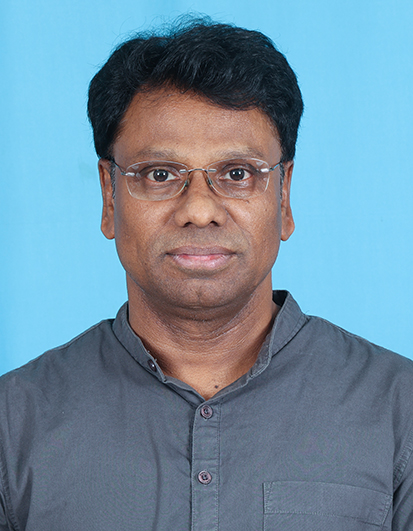
Dr.R.Kumaran
Centre for Training and Placement
Profile

The Centre for Training and Placement at GRI facilitates career opportunities by bridging academia and the professional ecosystem. It organizes campus recruitment drives, career counseling, and employability training to prepare students for the job market. The Placement Bureau is committed to student career growth through skill-building and professional connections.
Centre for Entrepreneurship Development
Director
Dr.K.Manikandan
Unnat Bharat Abhiyan
Regional Coordinating Institute
The Gandhigram Rural Institute (Deemed to be University), Gandhigram, Tamil Nadu
Unnat Bharat Abhiyan (UBA) is the flagship programme of the Ministry of Education, Government of India. The Indian Institute of Technology (IIT), Delhi, serves as the National Coordinating Institute for UBA, while the Gandhigram Rural Institute (DTBU), Gandhigram, acts as one of the Regional Coordinating Institutes. A Memorandum of Understanding (MoU) was signed between Gandhigram Rural Institute and IIT Delhi on 6th March 2019 and 9th April 2023, formalizing this collaboration. As the Regional Coordinating Institute, GRI, Gandhigram, coordinates UBA programmes across 164 Higher Education Institutions in eleven districts in the southern region of Tamil Nadu (as on 31.3.2025). GRI receives funding from National Coordinating Institute, UBA, IIT, Delhi to coordinate these initiatives. Additionally, GRI, Gandhigram, is recognized by the University Grants Commission (UGC) as a Regional Centre for capacity building of Faculty as Master Trainers for Community-Based Participatory Research. It also serves as Coordinator for UBA - Subject Expert Group for Rural Livelihoods.
Dr.K.Ravichandran
Regional Coordinator,
Unnat Bharat Abhiyan,
The Gandhigram Rural Institute (DTBU)
Gandhigram, Tamil Nadu
RCI/SEG, UBA Reports
Virtual Internship Programme on Sustainable Development Goals and Community Engagement (2.08.2021 to 25.08.2021)
|
|
The Gandhigram Rural Institute (Deemed To Be University)
| Faculty | Name | Designation |
|---|---|---|
 Coordinator | Dr. S. Kavitha Maithily | Associate Professor, Department of Home Science |
 Executive Member | Dr. K. Manikandan | Associate Professor, Department of Economics |
 Executive Member | Dr. P. S. Sreedevi | Associate Professor, Department of Education |
 Executive Member | Dr. M. Muthukumar | Associate Professor, Centre for Geoinformatics |
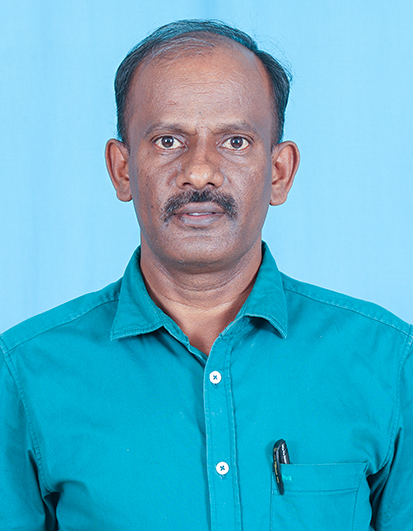 Executive Member | Dr. K. Dhevan | Associate Professor, Department of Cooperation |
 Executive Member | Dr. A. Thahira Banu | Associate Professor, Department of Home Science |
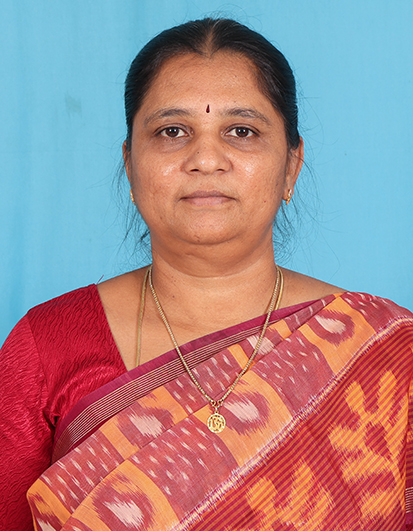 Executive Member | Dr. T. Kalaiselvi | Associate Professor, Department of Computer Science & Applications |
 Executive Member | Dr. R. Ramasubbu | Associate Professor, Department of Biology |
 Executive Member | Er. B. Sangeethavani | Assistant Professor, Centre for Rural Technology |
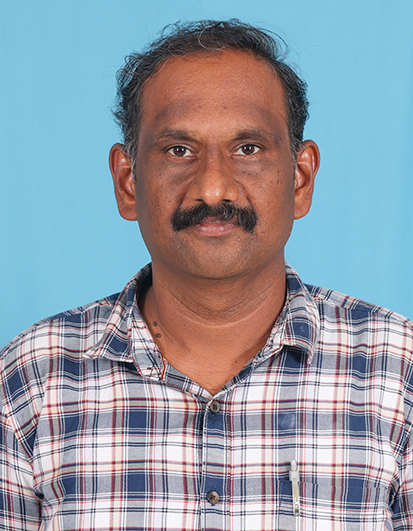 Executive Member | Dr. M. Arunachalam | Assistant Professor, Department of Chemistry |
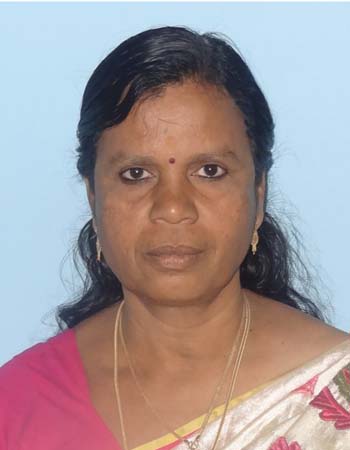 Executive Member | Mrs. K. Srikumari | SMS- Home Science, Krishi Vigyan Kendra |
UBA GRI Annual Reports.
| Annual Report 2019-20 | |
| Annual Report 2020-21 | |
| Annual Report 2021-22 | |
| Annual Report 2022-23 | |
| Annual Report 2023-24 |
Internal Complaints Committee
In compliance with the Supreme Court Judgment and guidelines issued in 1997 to provide for the effective enforcement of the basic human right of gender equality and guarantee against sexual harassment and abuse, more particularly against sexual harassment at work places the University Grants Commission (UGC) has issued circulars since 1998 and insisting the enactment of the Sexual Harassment of Women at Workplace (Prevention, Prohibition and Redressal Act-Sexual Harassment Act in April 2013) to all the universities, advising them to establish a permanent cell /committee and to frame guidelines to combat sexual harassment, violence against women and ragging at the universities and colleges.
It has further advised the universities to be proactive by developing a conducive atmosphere on the campus, where the women are respected and they are treated with dignity.
As per the guidelines of UGC and the Supreme Court, a Committee against Sexual Harassment/ (ICC) Internal Complaints Committee (SH) at GRI has been established to provide a healthy and congenial atmosphere to the staff and students of the University.
| S.No. | Name | Nominated as | |
|---|---|---|---|
| 1 | Dr.S.Meenakshi Professor Department of Chemistry, GRI | Chairperson & Nodal Officer | |
| 2 | Dr.K.S.Pushpa Professor & Head, Department of Home Science, GRI | Member | |
| 3 | The Dean, Student Welfare GRI, Gandhigram | Member | |
| 4 | The Director Centre for Women Studies, GRI, Gandhigram | Member | |
| 5 | The Lady Warden Ladies Hostel, GRI, Gandhigram | Member | |
| 6 | Dr.P.Kalaichelvan Section Officer Examination Section, GRI, Gandhigram | Member | |
| 7 | Smt.P.Murugayee Assistant Audit Section, GRI, Gandhigram | Member | |
| 8 | Mrs.Ramani Mathew Advocate & Social Activist, B6./83,MVM Nagar, First Cross, Karur Road, Dindigul - 624 001 | Member | |
| 9 | Ms.Anu Ratthika Research Scholar Department of Chemistry, GRI, Gandhigram | Member | |
| 10 | Mr.Sharvesh Prabhu VI B.Sc. (Hons.) Agriculture School of Agriculture and Animal Sciences, GRI, Gandhigram | Member | |
| 11 | Ms.K.Kavitha II MBA Department of Rural Industries and Management, GRI, Gandhigram | Member |
- Prevent discrimination and sexual harassment against women, by promoting gender amity among students and employees.
- Develop the guidelines and norms for a policy against sexual harassment. Work out procedures for combating sexual harassment and implementation of the policy.
- Make recommendations to Honorable Vice Chancellor for changes/elaborations in the Rules for students in the Prospectus and the Bye-Laws, to make them gender just.
- Lay down procedures for the prohibition, resolution, settlement and prosecution of acts of discrimination and sexual harassment against women, students and the employees.
- Deal with cases of discrimination and sexual harassment against women in a time bound manner aiming at ensuring support services to the victim.
- Recommend appropriate punitive action against the guilty.
- Prepare a detailed plan of action, both short and long term.
| S.No. | Name of student | Programme | Mobile No / Mail Id |
|---|---|---|---|
| 1 | Mr.S. Dickshan | II M.A. Tamil | 9600717583 dickshansiva@gmail.com |
| 2 | Ms. K.M.S. Janaranjani | I M.Sc. Physics | 6382861956 janaranjani2343@gmail.com |
| 3 | Mr. S. Rudhran | IV B.Tech. | 6384777284 nivirudhran@gmail.com |
| 4 | Ms. K. Kavitha | I MBA | 9442039542 k.kavithadg101@gmail.com |
| 5 | Ms. S. Divyashree | I M.A. Economics | 9489577312 Divyashree.s444@gmail.com |
Type the content here.
Type the content here.
Type the content here.
Type the content here.
Type the content here.
Type the content here.
DDU-KK
The University Grants Commission (UGC) has launched a scheme based on skills development as part of college/university education, leading to award of Bachelor of Vocation (B.Voc.) Degree (Three Years) with multiple exists such as Diploma (one year), Diploma (Two Years) under the National Skill Qualification Frame work (NSQF). Dean Dayal Upadhyay Center for Knowledge Acquisition and Upgradation of Skilled Human Abilities and Livelihood (KAUSHAL) was established in GRI in September 2015. The B.Voc. Programme is focused on universities and colleges, providing undergraduate studies which would also incorporate specific job roles and their National Occupational Standards (NOS) along with broad general education. This would enable the graduates completing B.Voc.to make meaningful participation in accelerating India’s economy by gaining appropriate employment, becoming entrepreneurs and creating a pool of manpower with skills